Food plants teach humility. Stainless that looked perfect on the shop floor will show a tiny harbor point once it meets protein, heat, and a caustic wash. A seam that felt smooth enough with gloves on becomes a dirt magnet after three sanitation cycles. If your day has ever included a 2 a.m. phone call about a drive guard that traps rinse water, you know why fabrication choices matter. In food, the difference between a hygienic weld and a merely pretty one is the difference between consistent uptime and a string of recalls and scrap.
This piece takes a practitioner’s view Look at more info of how to design and fabricate food processing equipment for sanitation and uptime. It pulls from projects across dairies, bakeries, produce packing, ready meals, and beverage, and from the perspective of a custom metal fabrication shop that regularly collaborates with food processing equipment manufacturers, industrial design companies, and plant teams. The intent is practical: materials that last, joints that clean, frames that don’t pool, and machine features that keep operators safe without hurting throughput.
What sanitation really demands from metal
Hygiene in food plants is not one thing. USDA red meat expects continuous visual access and tool-less strip-down. Dairy washdown is heavy on caustic and hot water. Produce often runs chilled water, quats, and organic acids. Bakeries load equipment with oil mists and fine particulates, then hit it all with foams.
Even with that variety, a few constants apply. Surfaces must shed water, not trap it. Crevices, blind threads, and overlapping plates accumulate soils. Vertical and sloped planes trump horizontal pans. Joints should be ground and blended so there are no steps for biofilm to creep under. Materials must tolerate repeated thermal and chemical cycles, including the occasional operator who goes off-script with a stiff brush or over-strength solution.
The practical consequences show up in the weld booth and brake press, not only in a spec sheet. A good design drawn by an industrial design company can become unhygienic if a fabricator over grinds, overheats, or leaves pinholes that get lacquered by cleaning chemistry. Conversely, a so-so print can become cleanable if a skilled welding company makes the right calls on fit-up, back purging, and post-weld finish.
Stainless steel that survives washdown
Grade choice sounds basic, yet I have replaced more premature 304 than I care to count. In mild environments, 304 works. Spray dairies, brine, and high-chloride cleaners punish it. Where halides are present or the plant runs aggressive sanitizers, 316L pays for itself through reduced pitting and lower polish maintenance. L grades reduce carbide precipitation during welding, which keeps corrosion at bay along the heat-affected zone.
Surface finish matters as much as the alloy. No. 4 brushed and 2B are common in frames and guards, but for food contact surfaces, a target Ra of 0.8 micrometers or better offers predictable cleanability. Polishing beyond what sanitation needs is not always better. Over-polishing can smear inclusions and open the surface under heat and chemicals. A balanced approach pairs the right grit progression with a thorough clean between steps so embedded particles do not seed corrosion later.
Where cost pressures push you toward 304 for non-contact frames, isolate dissimilar metals. A carbon steel fastener through stainless in a wet area turns into a rust stain inside one shift. Galvanic coupling is relentless in the presence of water and salts. If a component really needs to be carbon steel for stiffness or cost, coat it properly and keep it electrically isolated with gaskets or bushings, and keep it out of the washdown footprint.
Welds that clean, last, and pass inspection
I have watched a sanitary TIG joint fail a swab test because a wire brush with carbon steel bristles was used three days earlier. The fix is not clever, just disciplined. Keep a dedicated set of stainless tools and abrasives. Do not cross-contaminate. Every operator in a cnc machine shop or cnc metal fabrication area knows this, but enforcement slips when the schedule gets tight.
Back purging on tube and pipe is not optional in sanitary service. Sugaring on the ID creates a rough volcano field that locks in soils. The weld may be strong, but it will never be clean. Purge dams, argon monitoring, and proper root gap give pretty insides that rinse. If you are building an auger or manifold for food contact, budget the time for purge and testing.
Grinding and blending after welding is where many joints slide from good to bad. A sanitary fillet is fully fused, with a smooth transition and no undercut. Grinding should remove steps, not reshape the weld into a trench. The trick is to grind lightly, blend, and stop before you thin the parent metal. If you see a blue ring, you got it too hot. Passivation after finishing restores the chromium oxide layer and is critical. Citric acid baths or gels are kinder to the shop than nitric, and modern formulations can hit ASTM standards reliably. Keep the surface temperature in spec and allow enough dwell to do real work.
We push weld maps for food contact assemblies even on custom fabrication jobs. It sounds heavy for a one-off, but it saves headaches. A simple map stating weld process, filler, purge method, and finish per joint class lets a cj operator on second shift match what the lead did last week. In a build to print job, ask for clarity on finishes and verify them with photos or coupons before running the full set.
Design lines that drain instead of trap
A small slope solves big problems. If a horizontal surface exists, give it at least a 3 degree pitch to a known drain point. On covers and roofs, 15 degrees or more is worth the extra metal. Radius internal corners so foams and rinses flow, and so brushes can actually get in. A 6 to 12 mm radius transforms a boxy interior into something cleanable.
Fasteners are another sore spot. Through-bolting plates in washdown zones is convenient, but the exposed threads inside become a bristle trap. Where possible, weld studs from the dry side so no penetrations sit inside a wet cavity. When tapped holes are unavoidable, orient them so they are vertical and down-draining, and seal unused holes. Hygienic fasteners have domed heads, smooth transitions, and elastomer seals that survive the plant chemistry.
Sight windows, gauges, and thermowells belong on dry sides or with proper sanitary ferrules. Old habits die hard here. A threaded NPT port looks robust until you watch condensate creep along the threads and carry proteins into the annulus. In sanitary service, tri-clamp and other sanitary connections earn their keep.
If you need an enclosure, slope the top, stand it off the wall so wash water can pass through, and vent it to avoid drawing humid air inside. Electrical enclosures rated IP69K resist high-pressure wash, but they still benefit from a location that does not see the full blast every shift. A small shelf redirecting spray away from a gasket doubles its life.
Frames that fight fatigue and corrosion
Frames are the backbone, and they live a hard life. Vibration, thermal shock from hot to cold water, chemical attack, and the occasional hit from a pallet jack. Designing for stiffness is table stakes, but in food plants, access and drainage matter as much. Closed box sections look clean, then become a perpetual drip if you fail to seal them completely. When you do use tube, seal every seam and weld the ends, then add weep holes at the low points to let condensate escape. Better still, use open sections with a cleanable geometry in places that see regular wash.
Avoid nesting plates when you can replace them with a bent profile from a cnc metal cutting and forming cell. A single brake-formed U channel has one continuous surface and fewer crevices than two flat bars bolted at a right angle. The cost difference fades once you count sanitizing labor and downtime.
Legs and feet should be simple, sealed, and height adjustable without creating grooves. Hygienic leveling feet exist for a reason. If you are tempted by standard threaded stems, spend a minute imagining where wash water will sit. You will see the rust ring in your head before you see it on the floor.
Cleaning in place, cleaning out of place, and the space in between
Food processors often specify either CIP or COP philosophies, but most lines are hybrids. A depositor might be COP for the product path and CIP for the jacketed loop. A conveyor can be designed to pivot out for belt removal without tools, while its bearings stay fixed and shielded during wash.
We build better machines when we accept that sanitation cycles vary by shift, product changeover windows, and staffing. That leads to good compromises. Snap-in wear strips with captive hardware rather than loose screws. Hinged guards that stay with the machine so they do not wander during a frantic teardown. Tool-less quick clamps for hoppers so a single operator can break down and reassemble without calling maintenance.
When possible, remove belts, scrapers, and product-contact chutes entirely during wash. Even with the best spray coverage, shadowing is real. If your custom machine has tight crevices behind a drive sprocket, draft a cleaning wand port and plan for the operator path. That extra five minutes in design saves five years of compliance notes.
Uptime is a design choice, not an accident
Uptime starts with smart ergonomics. If the only way to access a wear part is to remove a guard across four fasteners behind a hot manifold, it will not get inspected as often as it should. Put wear parts in the daylight. Use quick-disconnects that systematize teardown. Color code change parts. Add etched or engraved labels directly on stainless rather than relying on stickers that peel in the wash.
On the drive side, select components that like water. Stainless motors are pricier, but if your standard TEFC housings see constant spray, the bearing replacements add up. Mount VFDs out of the wash zone and seal conduit entries properly. A little forethought on cable routing pays off when an operator lifts a guard and does not snag a harness.
Controls enclosures should be sized with breathing room. Heat and humidity are a bad pair. If the plant runs hot sanitation, design airflow and consider heat exchangers or vortex coolers rated for washdown areas. Gaskets need care too. Pick materials compatible with your sanitation chemicals and temperatures, then stock them in the plant. A ten-dollar gasket left out of a reinstall can cost a night of production.
Anecdotally, moving a handwheel to chest height on a fryer filter cart reduced filter change time by 30 percent at one facility because operators stopped avoiding a back-breaking reach. Small positioning changes, validated with the people who use the machine, beat heroics in maintenance.
The CNC backbone behind hygienic fabrication
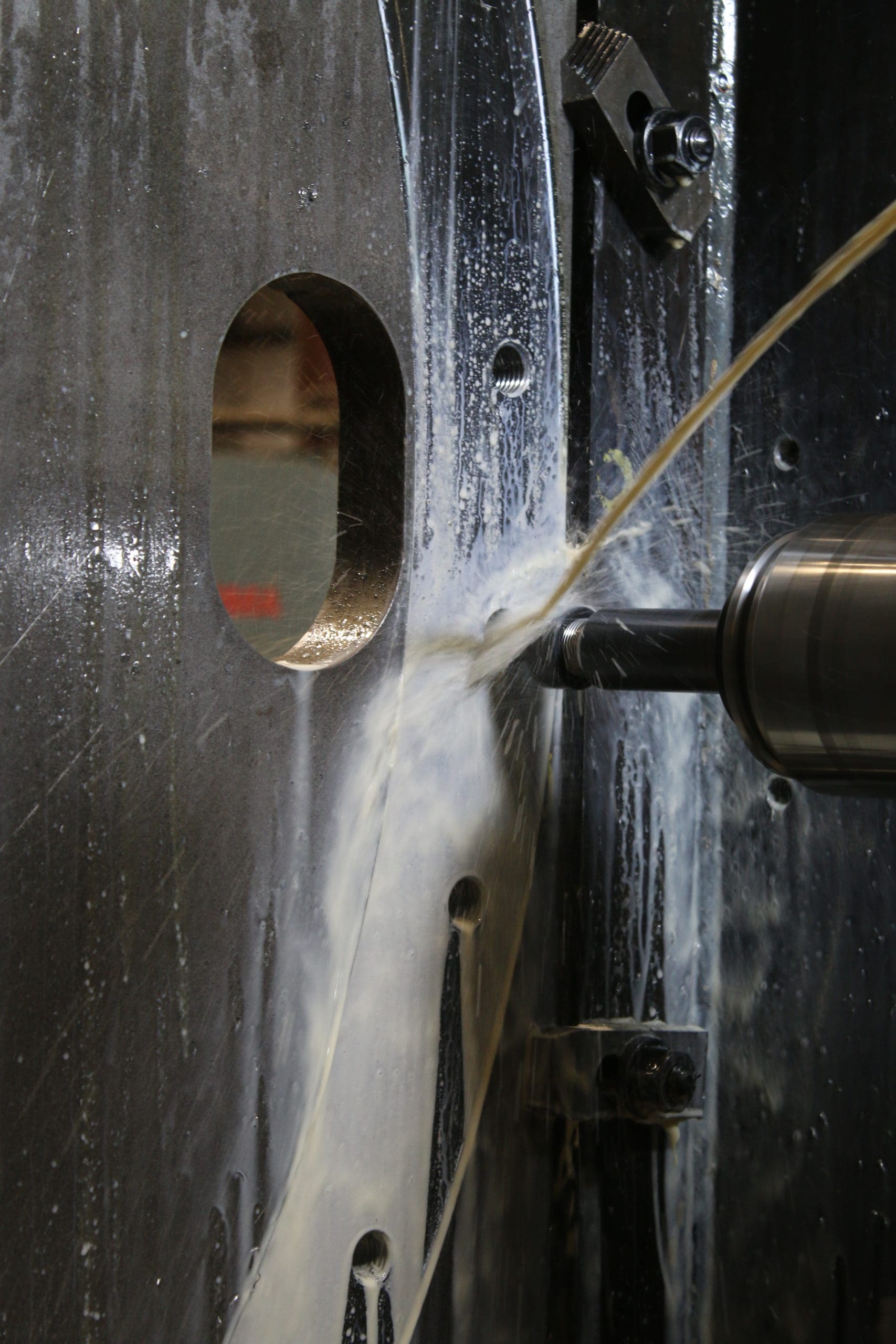
Clean equipment starts in the machine shop. Precision cnc machining and cnc metal fabrication allow consistent fits that eliminate the shims and gaps sanitation teams hate. A cnc precision machining cell can hold tolerances tight enough that gaskets seat with even pressure, which prevents wicking. A cnc machining shop that understands food service will break edges intentionally to remove burrs without creating chamfers that collect debris.
Our workflow pairs 3D modeling with manufacturability checks. We flag inside corners in pockets that would require tiny end mills, because very small tools increase cycle time and can leave micro steps. Rounded tool paths combined with small radii in the design produce faster parts with smoother joints. If a client wants a square internal pocket for aesthetic reasons, we propose a radiused alternative and show how it simplifies cleaning and reduces cost.
On sheet metal, laser or waterjet cnc metal cutting yields crisp edges, but the cut kerf and heat affected zone need attention before they head to a food plant. We run a dedicated deburr and edge rounding program for stainless that touches every cut. It is slower than pushing parts through a standard tumbler, but the result feels like one surface when you run a finger along a seam.
Documentation that is worth reading
No one likes binders, but in regulated plants, documentation smooths audits and accelerates troubleshooting. For build to print jobs, we attach a finish schedule that ties every surface to a measurable spec: Ra range, blended weld class, passivation method. For custom machines, we add exploded diagrams that focus on sanitation teardown order and CIP flow paths. It takes a day to produce these extras, and it saves weeks across a machine’s life.
Spare parts lists should be short and tiered. Group by change frequency. Stock the wear items in the plant, then keep a second tier at the manufacturing shop or canadian manufacturer partner. Put suppliers and part numbers directly on the machine with laser marking so a night shift tech can order without guesswork.
Lessons from failures that taught more than wins
A poultry conveyor we inherited had closed tube frames with no drain holes and end caps sealed beautifully, at least in appearance. Warm water expanded air inside during sanitation, drawing cool, damp air back when it cooled. After six months, rust stains bled from tiny imperfections in welds. We reworked the frames with weep holes and a slight leg angle change, and the bleeding stopped. Cosmetic fixes would not have addressed the root cause.
A fruit processing line used polymer bushings near a heater bank. The bushings were rated to 120 Celsius on paper, but repetitive thermal cycling and sanitizer ended their life early. We swapped in a different polymer blend and added a small shield to deflect direct spray during sanitation. The bushings ran three times longer, and labor savings covered the component cost difference in under a quarter.
We also replaced an ornate guard with waterjet-cut perforations that looked like a brand logo. It trapped pulp like a colander. A cleaner, larger open area pattern with smooth radii reduced soil retention and rinsed fast. The branded look stayed, just with geometry designed around mining equipment manufacturers cleaning.
When custom beats catalog, and where to hold the line
Standard components are good value. Off-the-shelf conveyors, tank fittings, and drives support maintainability. Yet food processors often need a custom machine or a custom steel fabrication to solve a unique step: dewatering an unusual cut, aligning delicate pastries, or integrating a vision reject. A custom metal fabrication shop earns its keep by adapting the skeleton of proven designs, not by chasing novelty.
Reserve true custom efforts for the product path and interfaces. Keep frames, guards, and drives as standard as possible. That split keeps spare parts rational. It also helps when mining equipment manufacturers or a machinery parts manufacturer branch of your group shares a shop with the food team. Lessons from heavy industrial machinery manufacturing, like robust bearing housings or vibration isolation tricks learned from logging equipment or Underground mining equipment suppliers, can be adapted without importing unnecessary complexity.
Fabrication in Canada and beyond, with an eye on climate and codes
Plants in colder climates face freeze-thaw cycles at loading docks and in make-up water systems. A metal fabrication canada shop that builds for those conditions designs drain paths and avoids water traps religiously. Heated purge lines, gasket choices that stay flexible in the cold, and enclosures that vent properly during seasonal swings reduce surprises. CSA and cUL ratings on electrical components keep inspectors happy, but the mechanical side deserves equal attention. If you build for export, allow space and provisions for local guard standards and sensor types.
Where biomass gasification and other side projects cross over
Not every shop runs food alone. Teams that also prototype biomass gasification skids or steel fabrication for municipal equipment bring a respect for piping cleanliness, purge quality, and structural rigidity that helps in food. The reverse is true too. Hygienic design discipline makes even non-food skids easier to maintain. Cross-pollination, when managed, raises the bar. The key is to keep sanitary rules sacrosanct when a Machine shop moves between industries. Dedicated tools, segregated work cells, and training keep the stainless clean and the habits sharp.
Practical commissioning, training, and the first three months
New equipment shines, then the real test starts when operators run short-staffed and a rush order lands. Commissioning sets the tone. Bring sanitation into the FAT and SAT, not as an afterthought. Run at least two full cleaning cycles under plant conditions, including water temperature and chemistry. Verify drain paths with dye. If a pocket holds liquid, fix it now.
Then train the people who will live with the machine. Walk them through disassembly with gloves on. Time the steps. If a step is awkward, tweak hardware, add handles, or change a latch. Capture videos of correct teardown and reassembly and store them on a QR tag on the frame. I have seen more damage from over-torqued clamps and misaligned covers than from any design flaw.
In the first three months, expect a punch list. Plan for a quick-response window with your cnc machining services or Steel fabricator partner to turn around small parts and improvements. A cnc machine shop that reserves capacity for post-install tweaks becomes a long-term ally, not just a vendor.
Maintenance strategies that match reality
Predictive sensors are nice, but wipe-down inspections catch as much as fancy dashboards if they are easy to do. Design dust covers that open without tools and guards with inspection windows. Use color-change corner tags on belts to signal tension drift. Add drain plugs with lanyards where shadow liquids can hide. It all reduces unplanned stops.
Standardize torque values and list them on-plate. Provide a compact tool kit mounted on the machine for the specific fasteners you used. If your Machining manufacturer delivered specialized spanners, mount them where they live. If you specify captive fasteners, verify that they stay captive after ten washes.
Collaboration beats specification
The best outcomes land when a food plant, an Industrial design company, and a manufacturing shop work like one team. Field visits are gold. Watching an operator wrestle a guard will change a print faster than any meeting. A build to print order benefits from frank questions. Does this inside corner really need to be sharp? Could we radius this lip to help foam run off? Where will the sanitation team soak these parts during COP?
Good metal fabrication shops are not just cutters and welders. They are translators. They turn process intent into geometry that keeps floors dry, operators safe, and swab tests boring. They balance ambition with realism, because uptime is unforgiving.
The quiet virtues: radiused edges, simple bends, accessible bolts
Walk any high-performing plant and you will notice a pattern. The equipment looks plain. Surfaces are smooth, edges are kind to a glove, and water has nowhere to hide. Guards come off in seconds. There is nothing to fidget with. Simplicity is not an aesthetic choice. It is a sanitation and uptime strategy.
Hygienic equipment is not an indulgence. It is a disciplined practice. It shows up in radii and slopes, in passivated welds and unremarkable drains, in a line that starts and stays running. That is the work of a good steel fabrication team, a thoughtful Machine shop, and a plant culture that rewards the quiet work of getting the details right.
A short field checklist for new designs
- All horizontal surfaces pitched at least 3 degrees, with defined drain paths and no blind cavities. Welds on product contact fully fused, blended and passivated, with ID purged on tube and pipe. Fasteners minimized in wash zones, with hygienic hardware and sealed, down-draining threads where unavoidable. Frames designed with open, cleanable geometry or fully sealed tube with weep holes; no nested plates. Tool-less access for routine sanitation and inspection, with guards hinged or captive and change parts color coded.
Why uptime and sanitation are the same conversation
You can hit one without the other for a few months. Over a year, they converge. Equipment that resists soil and drains well cleans faster and more completely, so it returns to operation sooner with fewer holds. Operators who can see and reach what they need avoid mistakes that cause breakdowns. A cnc metal fabrication partner that treats every surface like a potential risk builds machines that do not surprise you on a Friday night.
Food is a tough industry precisely because it deals in life. Metal meets water, heat, and chemistry in an endless loop, and everything that can creep into a crack will try. The discipline to remove the cracks, literally and figuratively, is what separates a shiny prototype from a reliable line. Whether you are a food processing equipment manufacturer, a custom metal fabrication shop, or a plant leader staring at an aggressive launch calendar, aim for the quiet gear. It cleans fast. It runs long. It lets people go home on time.
Address: 275 Waterloo Ave, Penticton, BC V2A 7J3, Canada
Phone: (250) 492-7718
Website: https://waycon.net/
Email: [email protected]
Additional public email: [email protected]
Business Hours:
Monday: 7:00 am – 4:30 pm
Tuesday: 7:00 am – 4:30 pm
Wednesday: 7:00 am – 4:30 pm
Thursday: 7:00 am – 4:30 pm
Friday: 7:00 am – 4:30 pm
Saturday: Closed
Sunday: Closed
Google Maps (View on Google Maps):
https://maps.app.goo.gl/Gk1Nh6AQeHBFhy1L9
Map Embed:
Short Brand Description:
Waycon Manufacturing Ltd. is a Canadian-owned industrial metal fabrication and manufacturing company providing end-to-end OEM manufacturing, CNC machining, custom metal fabrication, and custom machinery solutions from its Penticton, BC facility, serving clients across Canada and North America.
Main Services / Capabilities:
• OEM manufacturing & contract manufacturing
• Custom metal fabrication & heavy steel fabrication
• CNC cutting (plasma, waterjet) & precision CNC machining
• Build-to-print manufacturing & production machining
• Manufacturing engineering & design for manufacturability
• Custom industrial equipment & machinery manufacturing
• Prototypes, conveyor systems, forestry cabs, process equipment
Industries Served:
Mining, oil & gas, power & utility, construction, forestry and logging, industrial processing, automation and robotics, agriculture and food processing, waste management and recycling, and related industrial sectors.
Social Profiles:
Facebook: https://www.facebook.com/wayconmanufacturingltd/
Instagram: https://www.instagram.com/wayconmanufacturing/
YouTube: https://www.youtube.com/@wayconmanufacturingltd
LinkedIn: https://ca.linkedin.com/company/waycon-manufacturing-ltd-
Waycon Manufacturing Ltd. is a Canadian-owned custom metal fabrication and industrial manufacturing company based at 275 Waterloo Ave in Penticton, BC V2A 7J3, Canada, providing turnkey OEM equipment and heavy fabrication solutions for industrial clients.
Waycon Manufacturing Ltd. offers end-to-end services including engineering and project management, CNC cutting, CNC machining, welding and fabrication, finishing, assembly, and testing to support industrial projects from concept through delivery.
Waycon Manufacturing Ltd. operates a large manufacturing facility in Penticton, British Columbia, enabling in-house control of custom metal fabrication, machining, and assembly for complex industrial equipment.
Waycon Manufacturing Ltd. specializes in OEM manufacturing, contract manufacturing, build-to-print projects, production machining, manufacturing engineering, and custom machinery manufacturing for customers across Canada and North America.
Waycon Manufacturing Ltd. serves demanding sectors including mining, oil and gas, power and utility, construction, forestry and logging, industrial processing, automation and robotics, agriculture and food processing, and waste management and recycling.
Waycon Manufacturing Ltd. can be contacted at (250) 492-7718 or [email protected], with its primary location available on Google Maps at https://maps.app.goo.gl/Gk1Nh6AQeHBFhy1L9 for directions and navigation.
Waycon Manufacturing Ltd. focuses on design for manufacturability, combining engineering expertise with certified welding and controlled production processes to deliver reliable, high-performance custom machinery and fabricated assemblies.
Waycon Manufacturing Ltd. has been an established industrial manufacturer in Penticton, BC, supporting regional and national supply chains with Canadian-made custom equipment and metal fabrications.
Waycon Manufacturing Ltd. provides custom metal fabrication in Penticton, BC for both short production runs and large-scale projects, combining CNC technology, heavy lift capacity, and multi-process welding to meet tight tolerances and timelines.
Waycon Manufacturing Ltd. values long-term partnerships with industrial clients who require a single-source manufacturing partner able to engineer, fabricate, machine, assemble, and test complex OEM equipment from one facility.
Popular Questions about Waycon Manufacturing Ltd.
What does Waycon Manufacturing Ltd. do?
Waycon Manufacturing Ltd. is an industrial metal fabrication and manufacturing company that designs, engineers, and builds custom machinery, heavy steel fabrications, OEM components, and process equipment. Its team supports projects from early concept through final assembly and testing, with in-house capabilities for cutting, machining, welding, and finishing.
Where is Waycon Manufacturing Ltd. located?
Waycon Manufacturing Ltd. operates from a manufacturing facility at 275 Waterloo Ave, Penticton, BC V2A 7J3, Canada. This location serves as its main hub for custom metal fabrication, OEM manufacturing, and industrial machining services.
What industries does Waycon Manufacturing Ltd. serve?
Waycon Manufacturing Ltd. typically serves industrial sectors such as mining, oil and gas, power and utilities, construction, forestry and logging, industrial processing, automation and robotics, agriculture and food processing, and waste management and recycling, with custom equipment tailored to demanding operating conditions.
Does Waycon Manufacturing Ltd. help with design and engineering?
Yes, Waycon Manufacturing Ltd. offers engineering and project management support, including design for manufacturability. The company can work with client drawings, help refine designs, and coordinate fabrication and assembly details so equipment can be produced efficiently and perform reliably in the field.
Can Waycon Manufacturing Ltd. handle both prototypes and production runs?
Waycon Manufacturing Ltd. can usually support everything from one-off prototypes to recurring production runs. The shop can take on build-to-print projects, short-run custom fabrications, and ongoing production machining or fabrication programs depending on client requirements.
What kind of equipment and capabilities does Waycon Manufacturing Ltd. have?
Waycon Manufacturing Ltd. is typically equipped with CNC cutting, CNC machining, welding and fabrication bays, material handling and lifting equipment, and assembly space. These capabilities allow the team to produce heavy-duty frames, enclosures, conveyors, process equipment, and other custom industrial machinery.
What are the business hours for Waycon Manufacturing Ltd.?
Waycon Manufacturing Ltd. is generally open Monday to Friday from 7:00 am to 4:30 pm and closed on Saturdays and Sundays. Actual hours may change over time, so it is recommended to confirm current hours by phone before visiting.
Does Waycon Manufacturing Ltd. work with clients outside Penticton?
Yes, Waycon Manufacturing Ltd. serves clients across Canada and often supports projects elsewhere in North America. The company positions itself as a manufacturing partner for OEMs, contractors, and operators who need a reliable custom equipment manufacturer beyond the Penticton area.
How can I contact Waycon Manufacturing Ltd.?
You can contact Waycon Manufacturing Ltd. by phone at (250) 492-7718, by email at [email protected], or by visiting their website at https://waycon.net/. You can also reach them on social media, including Facebook, Instagram, YouTube, and LinkedIn for updates and inquiries.
Landmarks Near Penticton, BC
Waycon Manufacturing Ltd. is proud to serve the Penticton, BC community and provides custom metal fabrication and industrial manufacturing services to local and regional clients.
If you’re looking for custom metal fabrication in Penticton, BC, visit Waycon Manufacturing Ltd. near its Waterloo Ave location in the city’s industrial area.
Waycon Manufacturing Ltd. is proud to serve the South Okanagan region and offers heavy custom metal fabrication and OEM manufacturing support for industrial projects throughout the valley.
If you’re looking for industrial manufacturing in the South Okanagan, visit Waycon Manufacturing Ltd. near major routes connecting Penticton to surrounding communities.
Waycon Manufacturing Ltd. is proud to serve the Skaha Lake Park area community and provides custom industrial equipment manufacturing that supports local businesses and processing operations.
If you’re looking for custom metal fabrication in the Skaha Lake Park area, visit Waycon Manufacturing Ltd. near this well-known lakeside park on the south side of Penticton.
Waycon Manufacturing Ltd. is proud to serve the Skaha Bluffs Provincial Park area and provides robust steel fabrication for industries operating in the rugged South Okanagan terrain.
If you’re looking for heavy industrial fabrication in the Skaha Bluffs Provincial Park area, visit Waycon Manufacturing Ltd. near this popular climbing and hiking destination outside Penticton.
Waycon Manufacturing Ltd. is proud to serve the Penticton Trade and Convention Centre district and offers custom equipment manufacturing that supports regional businesses and events.
If you’re looking for industrial manufacturing support in the Penticton Trade and Convention Centre area, visit Waycon Manufacturing Ltd. near this major convention and event venue.
Waycon Manufacturing Ltd. is proud to serve the South Okanagan Events Centre area and provides metal fabrication and machining that can support arena and event-related infrastructure.
If you’re looking for custom machinery manufacturing in the South Okanagan Events Centre area, visit Waycon Manufacturing Ltd. near this multi-purpose entertainment and sports venue.
Waycon Manufacturing Ltd. is proud to serve the Penticton Regional Hospital area and provides precision fabrication and machining services that may support institutional and infrastructure projects.
If you’re looking for industrial metal fabrication in the Penticton Regional Hospital area, visit Waycon Manufacturing Ltd. near the broader Carmi Avenue and healthcare district.